
Disclaimer
I personally do not advocate any process or procedure contained in any of my human publications. Information presented is not intended to provide legal, lawful, financial or medical advice, diagnosis, treatment, cure, nor prevent any disease. Views expressed are for educational purposes only. I surround, protect, purify and make harmless the following information.
The next food crisis is already in motion
By Unshadowed
Formerly Ice Age Farmer
June 14, 2026
In a new report, the World Economic Forum confirms we have entered a global food crisis and unsurprisingly reiterates the same policy suggestions the UN’s FAO issued a few weeks ago:
- saddle farmers with debt, which can then be used to ensure compliance
- use AI and field mapping/surveillance for “precision“ applications of irrigation and fertilizer,
- generally consolidate control of food production into the hands of the technocrats.
Source https://substack.com/@unshadowed/note/c-276030590
UN FAO Warns of Food Crisis, Announces Technocratic Takeover of Food Production
By Unshadowed
May 26, 2026
The UN's FAO just warned of a major global food crisis triggered by the Strait of Hormuz conflict.
In the video, Christian decodes what they are actually saying. From digital registries and surveillance to debt traps and corporate control, this is the technocratic takeover of food production hidden behind "resilience" language. The real solution lies in decentralized, self-reliant food growing ... like Russia's dacha gardens that fed a nation during collapse. Watch until the end for the better path forward. 21:34 mins
WEF Report
May 28, 2026
The world is entering an age of shocks, where crises are no longer isolated events but interconnected disruptions with global consequences. COVID-19 exposed vulnerabilities in global supply chains. The war in Ukraine disrupted food and energy markets. Now, the Strait of Hormuz crisis is revealing how tightly interconnected energy, fertilizer, and food markets have become.
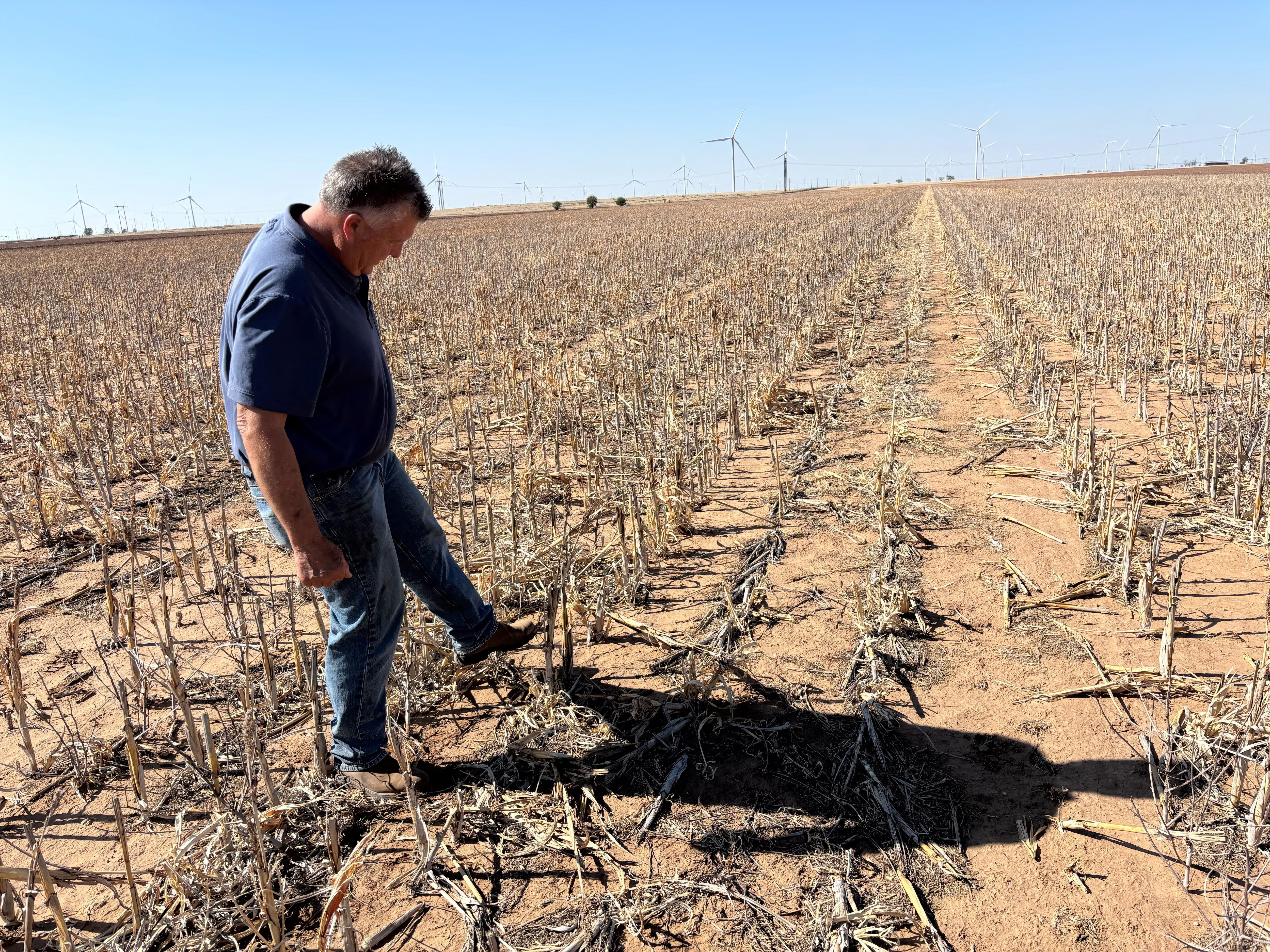
Chief economists see dramatic increases in the cost of food on the horizon due to Strait of Hormuz-related supply shock.
World coup strategists are also tightly interconnected
The Strait of Hormuz is one of the world’s most critical chokepoints. Before the conflict, roughly 35% of global crude oil exports, 20% of liquefied natural gas exports, and up to 30% of fertilizer exports transited through this narrow strip of water – along with sulfur, essential for phosphate fertilizer production. The blockade severely disrupted global fertilizer supply chains just as planting seasons advance across both hemispheres. Continues at https://www.weforum.org/stories/2026/05/strait-hormuz-food-security-crisis-fertilizer/
Ranchers Sound Alarm: Data Centers Devouring Water and Farmland
By Unshadowed
June 13, 2026
Ranchers are watching data centers explode across rural America — sucking up the water, land, and energy needed to grow food. This is not Chinese propaganda, as some claim; it’s reality.
One large facility can drink 5 million gallons of water per day. That’s enough for 140,000 cows. Smaller ones still rival 30,000-head herds. Projections show data centers could claim 3-9% of Texas’s total water by 2040, with similar strains hitting other states.
In Georgia, one data center “lost” nearly 30 million gallons through “improperly tracked connections” while locals were forced to conserve water. These are built for 50+ years of operation, even in drought-prone West Texas, Arizona, New Mexico—regions already stretched thin by aquifer decline and extreme weather.
Technocrats are prioritizing the servers powering their AI surveillance and narrative control, to the detriment of producers who actually feed the country. Continues at https://substack.com/@unshadowed/note/c-275523802
Food Security, Food Sovereignty, and Systems We Cannot See
What happens when a society becomes so focused on measuring outcomes that it stops examining the systems that produce them?
The Hidden Architecture of Food Access
In his work, Sen identified what he called “entitlements,” the mechanisms through which people gain access to food. He demonstrated that hunger could not be understood solely through the lens of food availability. Access mattered. But the systems that made access possible mattered even more.
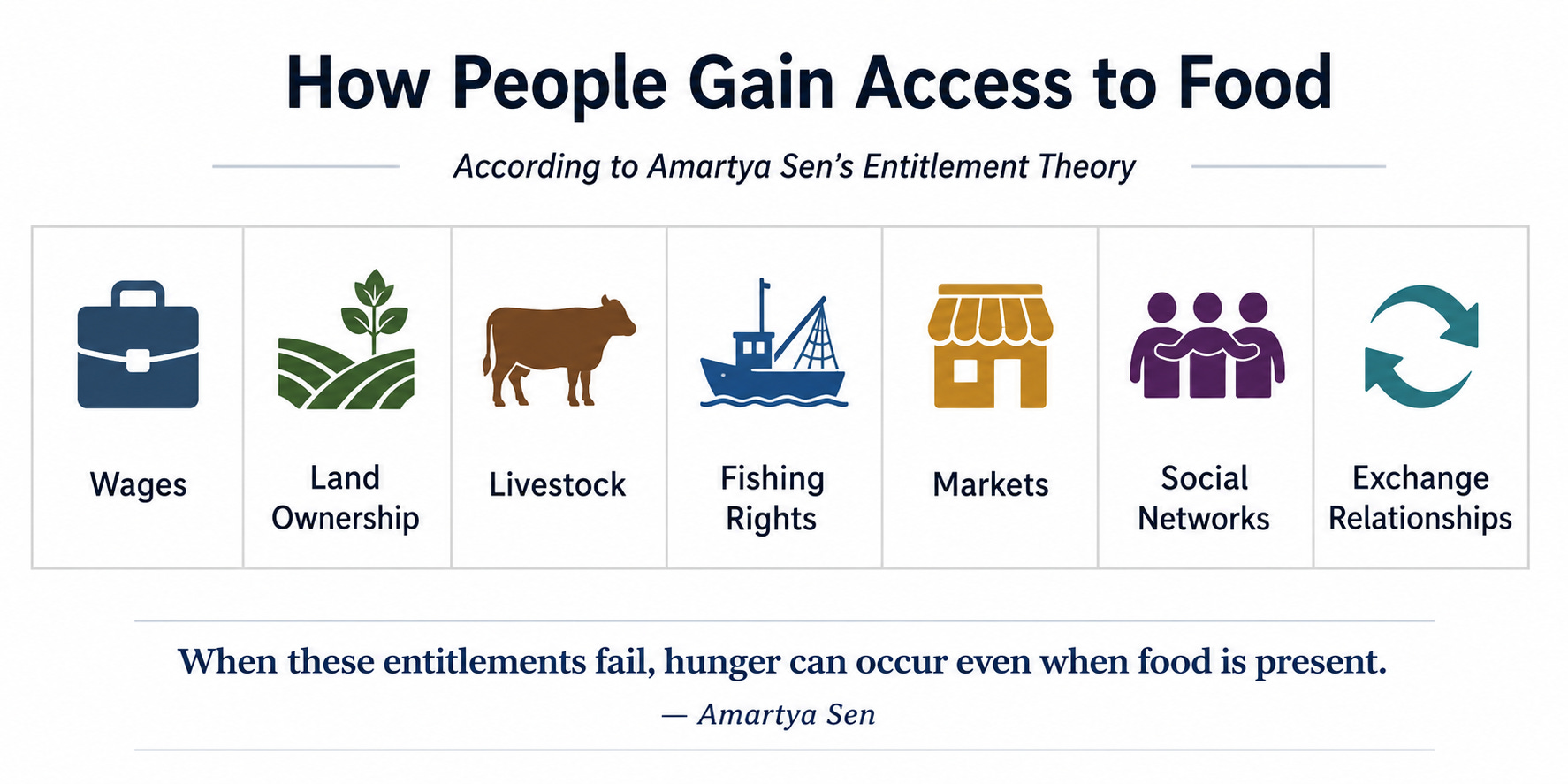
To understand why hunger persists, we must look beyond the outcome and into the system that produces it. Continues at https://rabbitholeramblings.substack.com/p/food-security-food-sovereignty-and
Change is inevitable, personal growth is optional
Listening to gentle signs of the Universe today, can save painful wake-up calls tomorrow.
Without prejudice and without recourse
Doreen Agostino
Our Greater Destiny Blog
foodsecurity
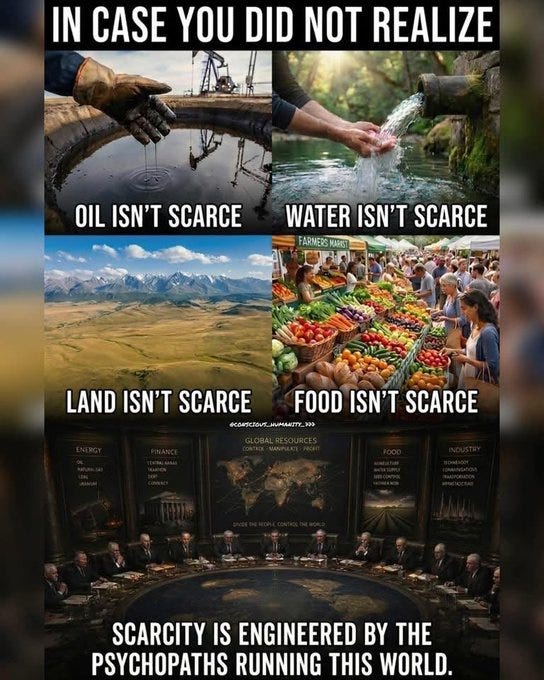
They should know. They helped create it.
'In case you did not realize' image added. Source https://substack.com/@christine646805/note/c-269629668