
Disclaimer
I personally do not advocate any process or procedure contained in any of my human publications. Information presented is not intended to provide legal, lawful, financial or medical advice, diagnosis, treatment, cure, nor prevent any disease. Views expressed are for educational purposes only. I surround, protect, purify and make harmless the following information.
Bio-Engineered Venom in our Food, Seeds, Common Drugs
Apr 18, 2026
Imagine biting into a fresh tomato or serving up a bowl of rice, unaware that deep within the plant’s DNA lies a venom protein borrowed from a snake, scorpion, or spider. It sounds like science fiction, but it’s not.
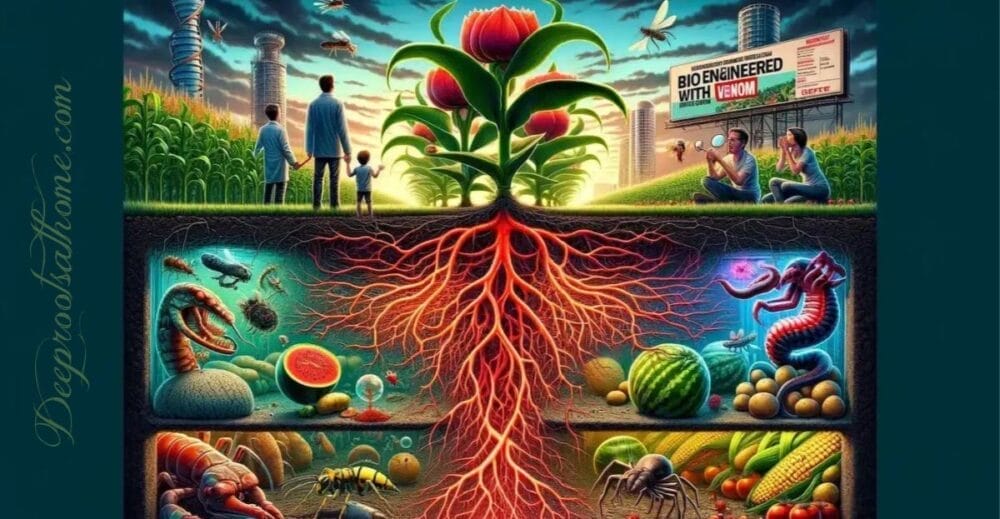
Image (and excerpts) taken from “Are You Planting Vegetable Seeds In Your Garden Designed To Produce Venom?” at Off the Grid News, by author Bill Heid.
According to the study’s authors, venom-based biotechnology holds promise for creating what they call “bioinsecticides.” The idea is that plants, through genetic-engineering, can internally produce venom proteins that repel or kill attacking pests. It’s been offered by marketers as a more “natural” solution than synthetic pesticides.
But some researchers aren’t convinced… and the backlash is growing.
Behind the Genetic Curtain: Who’s Engineering These Seeds?
The research paper’s graphics, recently circulated in an exposé presentation that’s gone viral, reveal a startling matrix: color-coded dots representing venom types (red), corporations and universities (blue), and the genetically engineered crops (green) that carry these toxic traits.
Among the companies named are agricultural giants like Bayer, Monsanto, BASF, and even food processors like Frito-Lay. The crops? Everything from rice and corn to potatoes, melons, celery, lettuce, and even stevia.
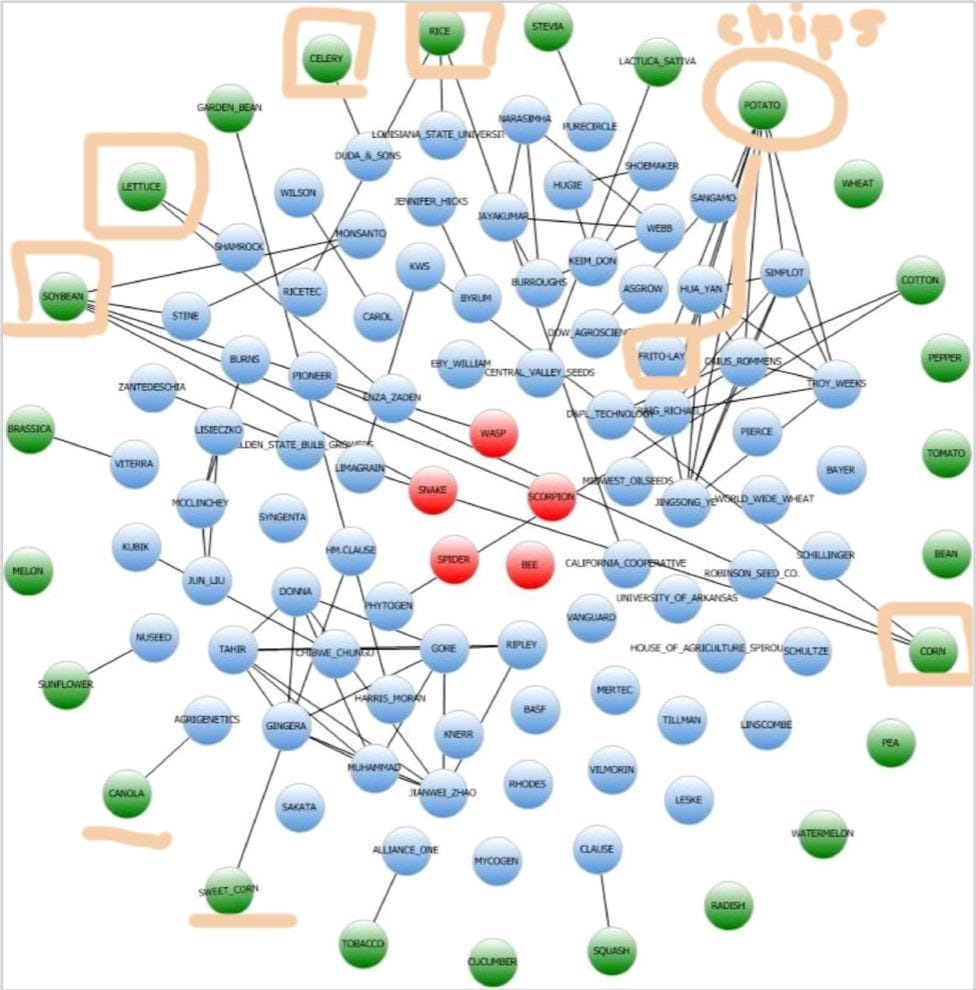
It’s LEGAL To Sell Venomized Seeds In The U.S.!
If this technology is so beneficial, why hasn’t the public been informed?
One reason is that by law, GMO seed-engineering labels are not required in the U.S. The USDA’s National Bioengineered Food Disclosure Standard requires labeling of bioengineered foods for human consumption, but this does not specifically address seeds.
Why Weren’t We Told About the Venom?
The authors of the Venoms study states the result is that the vegetable plant itself becomes toxic to insects, potentially reducing the need for external pesticide applications. These GMO venom proteins are produced systemically throughout the plant, and of course, they end up in the leaves, stalks, roots, and the parts we eat.
From Biotech to the Buffet: Dangerous Venom in the Food Chain
The biotechnology industry argues that venom-derived proteins used in agriculture are carefully selected for specificity… meaning they are lethal to pests, but supposedly safe for humans.
Some venom components, like Exendin-4 (found in the venom of the Gila monster), are already being used in drugs like Ozempic and Wegovy to manage diabetes and weight loss.
Where are the long-term studies?
While this is called a “breakthrough” in medicine, critics argue that venom uses raise even more concerns when similar proteins are being embedded in our food supply without public knowledge and NO long term studies! Continues at https://deeprootsathome.com/dangerous-venom-in-our-food-veggie-seeds-common-drugs/
Science Direct highlights
Nov 01, 2021
Scorpion, wasp, and snake venom are being increasingly reported in patents.
Giant Ag-biotech companies, like Monsanto, are the main assignees of these patents.
Venom biodiversity is being used mainly to develop insect-resistant new crop varieties and biopesticides.
Commodities like soybean, corn, cotton, rice, and wheat are the leading in new crop varieties.
Agriculture, environment, and society are benefiting from this use of venom biodiversity and biotechnology.
Abstract
Agriculture can benefit from the biotechnological use of animal venom biodiversity. We explored the patent database to find the prevailing applications of scorpion, snake, spider, bee, and wasp venoms for agricultural purposes. We searched for patents registered worldwide using the keywords “animal species” AND “venom” associated with the Cooperative Patent Classification (CPC) subclasses, based on Google Patents by November 2020. The results indicate an increasing frequency in patents related to animal venoms. Scorpion, snake, and wasp appeared most frequently, besides other species. The inventors concentrate on two subclasses, namely new plant varieties development (A01H) and biopesticides (A01N). Monsanto and other giant agricultural and biotechnology companies lead the list in the number of patents. New varieties of crops, like soybean, corn, cotton, rice, and wheat, are the most frequent inventions. The benefits of using natural venoms in insect-resistant plant varieties and biopesticides are pertinent to agriculture, the environment, and human health.
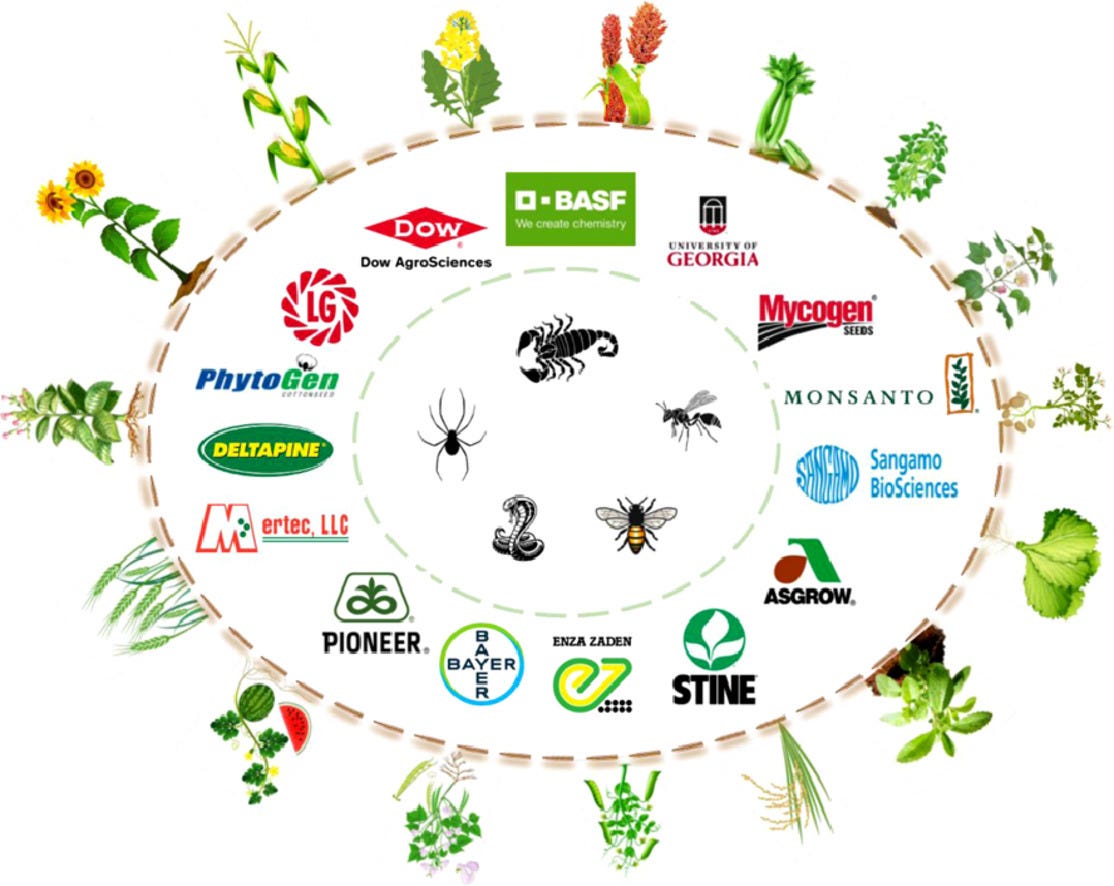
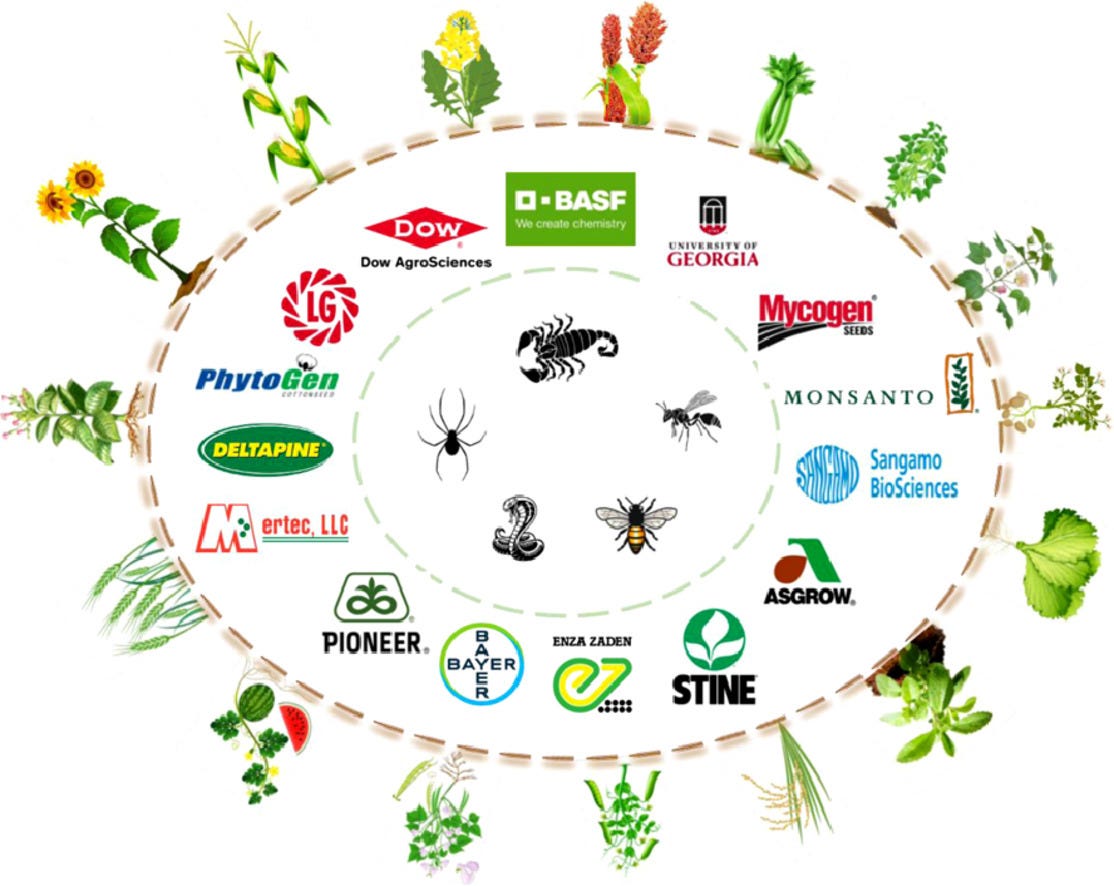
https://www.sciencedirect.com/science/article/pii/S2667041021000100
Frequency beats chemistry
Placebos work b/c frequency beats chemistry and that's just with the mind involved. Since the heart is 100 times stronger electrically and up to 5,000 times stronger magnetically than the brain, imagine what getting the heart involved can do.
The highest level of frequency that leaves the human body is AUTHENTICITY. https://medium.com/know-thyself-heal-thyself/authenticity-the-highest-frequency-of-human-emotion-e2b8bdd36347
39 seconds
Believing is seeing
Evil inverts the truth. In other words, most humans ‘must’ see before they will believe. The opposite is true; believing is seeing because we are conscious creators. Proof https://www.ourgreaterdestiny.ca/p/the-science-of-how-frequency-beast
Transform fear into curiosity, new awareness and experiential knowing.
This is what the awakening is truly about
And we have turned the corner.
Without prejudice and without recourse
Doreen Agostino
Our Greater Destiny Blog
gmo
Apr 29, 2026 I just inserted reassurance, with receipts "Believing is Seeing".
Not surprising but still disturbing. Thank you.